For anyone who's ever wondered what exactly constitutes the "Hegelian dialectic," how it operates with the concept of "praxis" to create "diaprax," and how diaprax has been utilized to brainwash people and restructure the modern Church, then this is the video to study.
Dr. Robert Klenck, a Christian and fairly young orthopedic surgeon from southern California, presents a most exhaustive review of atheistic and humanistic influences that drive the so-called Church Growth Movement (CGM) in this two-part seminar. Part I is entitled "How the Church Is Incorporating the Diaprax and Why"; Part II is entitled "Manipulating the Church into Globalism." The video runs approximately 2 hours 13 minutes. Dr. Klenck has researched these topics for several years, after this philosophy infiltrated his own church. He abundantly counters this man-made philosophy with the Word of God using the KJV, and he boldly reveals the single, driving force that is truly behind the whole CGM: Satan himself, who is using the movement to destroy the New Testament Church.
CGM has many aliases, including "Seeker-Sensitive Church," "User-Friendly Church," "Purpose-Driven Church," "Cell or Meta Church," "Mission-Driven Church," "Disciple-Making Church," and "The 21st-Century Church."
CGM defined: CGM is the utilization of modern, secular marketing techniques by the Church in order to draw and hold large numbers of people by meeting their "felt needs." The Church then "converts" and "disciples" these people through the use of modern, organizational management ("total quality management-style") techniques, so that they can effect "change" in the community and the world.
CGM accomplishes this through diaprax, which involves practicing ("praxis") the Hegelian dialectic ("dia") process repeatedly, in order to achieve gradual, incremental, and continual CHANGE (aka innovation).
The Hegelian dialectic, then, is developmental and evolutionary, with the end point being complete perfection; i.e., man can become God apart from God. The Hegelian dialectic principle is "synthesis" + "antithesis" = "consensus." The Church uses diaprax by purposefully bringing believers (synthesis) together with unbelievers (antithesis) to discuss moral and social issues through seeker services, "Bible study," and small groups. Such meetings always utilize a "facilitator" (aka change agent, group leader) to achieve a predetermined outcome among the group (consensus). With each meeting, the believer is gradually moved away from his/her original position of moral absolutism in order to get along with the group as a whole (consensus - "go along to get along"). The facilitators/change agents utilize peer pressure (fear of not belonging to the group) to achieve their goals. The modern Church believes that only through such techniques can we all attain world peace. In reality, diaprax is brainwashing.
The "church" setting and message presented are all designed to be as inoffensive to unbelievers as possible: religious objects like crosses are absent or inconspicuous; the building resembles a theatre without pews; dress is informal and casual; contemporary music, drama, dance, and entertainment reign with high-tech innovations like wide video screens; predominant use of NIV or other New Age Bible translations - avoid KJV; messages are motivational, positive, "feel-good," appeal to "felt needs" and self-esteem, present half-truths, and avoid or gloss over hard-core topics like sin, homosexuality, feminism, hell, etc. The CGM severely compromises God's Word ever so gradually to the point that "believers" eventually sacrifice their Bible-based theology without realizing it.
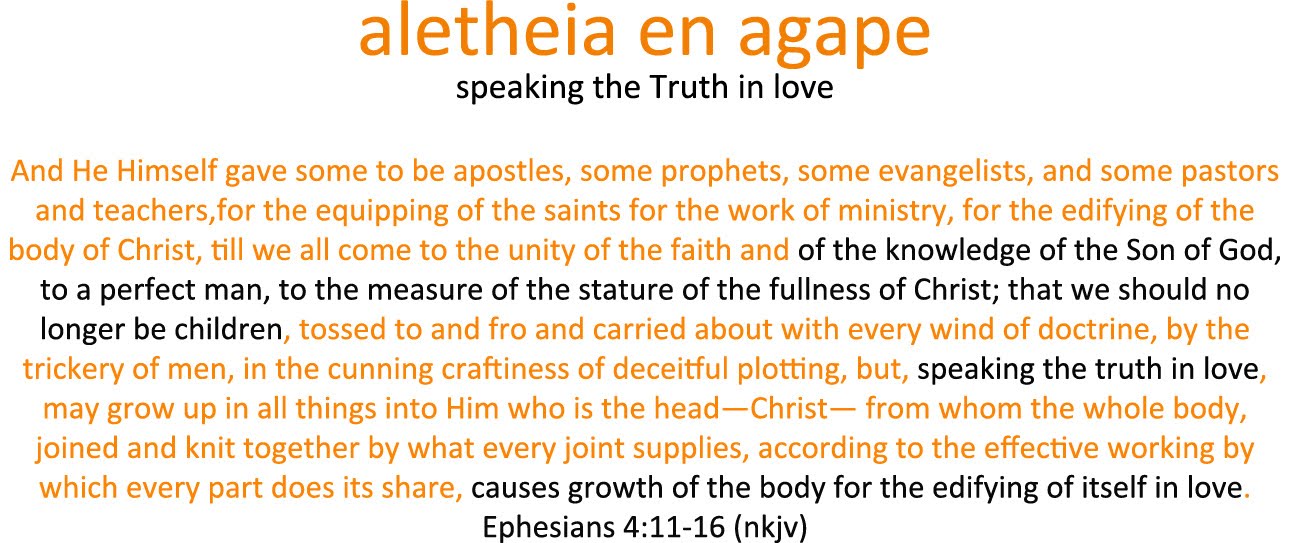
A highly detailed discussion focuses upon those whom Satan has principally used to orchestrate the CGM, their unbiblical philosophies touted through their various publications, and how they manage to twist Scripture to fit their own agenda: Dr. Rick Warren (pastor of Saddleback Church), Rev. Bill Hybels (pastor of Willow Creek Church), Dr. Robert Schuller (pastor of the Crystal Cathedral), and others like Anthony Robbins, Tom Patterson, Peter Drucker, and Bob Buford. These and others like them defy Ephesians 4:11-13, which states that the purpose of the Church is for perfecting the saints, edifying the body of Christ, and coming together in the unity of faith. The Church is not designed to cater to unbelievers.
The purpose of the CGM is to create a one-world religion and world peace through tolerating and accepting all faiths and creeds (Christian as well as non-Christian) as of equal merit. This is accomplished by nullifying the judgment of Christ and preaching only God's love. This further leads to a paradigm shift, whereby the Patriarch (Father God) shifts to Matriarch (Mother Earth), hierarchal leadership shifts to decentralized leadership (everybody is a "leader," except in crisis situations, when leadership becomes totalitarian), and accountability to God shifts to accountability to our fellow man and the Earth itself.
Because of the phenomenal amount of information presented, I recommend viewing the video in stages and viewing it several times to digest the material properly.
Bible teaching, even in the best of venues today, has been deliberately dumbed-down, made as broad and as shallow as possible, oversimplified, adapted to the lowest common denominator-- and then tailored to appeal to people with short attention spans.
Sermons are almost always brief, simplistic, overlaid with as many references to pop culture as possible, and laden with anecdotes and illustrations. (Jokes and funny stories drawn from personal experience are favored over cross-references and analogies borrowed from Scripture itself.) Typical sermon topics are heavily weighted in favor of man-centered issues (such as personal relationships, successful living, self-esteem, how-to lists, and so on)--to the exclusion of the many Christ-exalting doctrinal themes of Scripture. In other words, what most contemporary preachers do is virtually the opposite of what Paul was describing when he said he sought "to declare . . . the whole counsel of God" (Acts 20:27).
http://www.gty.org/Resources/Articles/A234
John MacArthur
Why do so many evangelicals act as if false teachers in the church could never be a serious problem in this generation?
Why do so many evangelicals act as if false teachers in the church could never be a serious problem in this generation? Vast numbers seem convinced that they are "rich, have become wealthy, and have need of nothing--and do not know that [they] are wretched, miserable, poor, blind, and naked" (Revelation 3:17).
In reality, the church today is quite possibly more susceptible to false teachers, doctrinal saboteurs, and spiritual terrorism than any other generation in church history. Biblical ignorance within the church may well be deeper and more widespread than at any other time since the Protestant Reformation. If you doubt that, compare the typical sermon of today with a randomly chosen published sermon from any leading evangelical preacher prior to 1850. Also compare today's Christian literature with almost anything published by evangelical publishing houses a hundred years or more ago.
Bible teaching, even in the best of venues today, has been deliberately dumbed-down, made as broad and as shallow as possible, oversimplified, adapted to the lowest common denominator-- and then tailored to appeal to people with short attention spans.
Sermons are almost always brief, simplistic, overlaid with as many references to pop culture as possible, and laden with anecdotes and illustrations. (Jokes and funny stories drawn from personal experience are favored over cross-references and analogies borrowed from Scripture itself.) Typical sermon topics are heavily weighted in favor of man-centered issues (such as personal relationships, successful living, self-esteem, how-to lists, and so on)--to the exclusion of the many Christ-exalting doctrinal themes of Scripture. In other words, what most contemporary preachers do is virtually the opposite of what Paul was describing when he said he sought "to declare . . . the whole counsel of God" (Acts 20:27).
Not only that, but here's how Paul explained his own approach to gospel ministry, even among unchurched pagans in the most debauched Roman culture:
I, brethren, when I came to you, did not come with excellence of speech or of wisdom declaring to you the testimony of God. For I determined not to know anything among you except Jesus Christ and Him crucified. I was with you in weakness, in fear, and in much trembling. And my speech and my preaching were not with persuasive words of human wisdom, but in demonstration of the Spirit and of power, that your faith should not be in the wisdom of men but in the power of God. (1 Corinthians 2:1-5)
Notice that Paul deliberately refused to customize his message or adjust his delivery to suit the Corinthians' philosophical bent or their cultural tastes. When he says later in the epistle, "To the Jews I became as a Jew . . . to those who are without law, as without law . . . to the weak I became as weak, that I might win the weak. I have become all things to all men, that I might by all means save some" (1 Corinthians 9:20-22), he was describing how he made himself a servant to all (v. 19) and the fellow of those whom he was trying to reach. In other words, he avoided making himself a stumbling block. He was not saying he adapted the gospel message (which he plainly said is a stumbling block--1:23). He did not adopt methods to suit the tastes of a worldly culture.
Paul had no thought of catering to a particular generation's preferences, and he used no gimmicks as attention-getters. Whatever antonym you can think of for the word showmanship would probably be a good description of Paul's style of public ministry. He wanted to make it clear to everyone (including the Corinthian converts themselves) that lives and hearts are renewed by means of the Word of God and nothing else. That way they would begin to understand and appreciate the power of the gospel message.
Remember those who rule over you, who have spoken the word of God to you, whose faith follow, considering the outcome of their conduct. Heb 13:7
For the time will come when they will not endure sound doctrine, but according to their own desires, because they have itching ears, they will heap up for themselves teachers; and they will turn their ears away from the truth, and be turned aside to fables. 2 Tim 4:3-4
Dr. John MacArthur is pastor-teacher of Grace Community Church. Following in the steps of his father, Dr. Jack MacArthur, John represents five successive generations of pastors in his family. He is also president of The Master's College and Seminary and is heard daily on "Grace to You," a nationally syndicated radio broadcast. The Grace to You ministry has distributed more than 10 million audiocassettes of his messages. John is also the author of many books, including The MacArthur New Testament Commentary series, The Gospel According to Jesus, and the newly-released The MacArthur Study Bible.
Martin Luther nailed his 95 theses to the door of the Castle Church in Wittenberg, the public bulletin board of his day. In like manner, we, Athanasius and Chrysostom, post these 95 theses on the door of the internet. Like the original theses, these are debatable, for we believe that it is through vigorous debate that the spirits are tested and truth is revealed.
In publishing these theses, we do not intend to foment division, but to expose those who are creating division within the body of Christ. We are not addressing any particular church body or person, but invite all who love the Gospel of Jesus Christ to engage in this debate. We do so in the spirit of the great Reformer, Martin Luther, as we implore the mercies of God upon His Church, for the sake of Jesus Christ, the Lord of the Church and Bishop of our souls.
A sample of the 95 theses on the door of the internet...
56. The old papacy arrogated the Church’s treasury of merits; the new papacy arrogates the Church’s treasury.
57. The old papacy said, “As the coin in the coffer clings, so the soul from purgatory springs.”
58. The new papacy says, “As the coin in the church coffer clings, so another program out of debt springs.”
59. The old papacy counted plenary indulgences; the new papacy counts money and people.
60. The old papacy suppressed the Gospel through canon law; the new papacy suppresses the Gospel through constitutions and by-laws.
61. The old papacy was a friend of Caesar; the new papacy is a friend of Mammon.
62. The old papacy bound a man’s conscience for the sake his wallet; the new papacy binds a man’s wallet for the sake of his conscience.
63. The old papacy promulgated infallible dogma; the new papacy promulgates undebatable visions.
64. The old papacy claims to sit on the seat of Peter; the new papacy claims to sit on the mandate of the majority.
65. The old papacy reserved the right to judge doctrine and practice; the new papacy judges doctrine and practice by commissions and committees.
66. The old papacy issued “bulls;” the new papacy issues task force reports.
67. The old papacy had a college of cardinals; the new papacy has high-priced consultants. To read the entire posting from www.extremetheology.com or you may want to add your comments, please do go to http://www.extremetheology.com/2008/10/the-new-95-theses.html
1. When our Lord and Master Jesus Christ said “Repent,” He willed that the whole life of believers should be one of repentance.
2. To “repent” means to be contrite for one’s sins and to trust Jesus Christ and solely in His completed work for one’s forgiveness, life, and salvation.
3. Those who describe the Christian life as purpose-driven deny true repentance, confuse the Law and the Gospel, and obscure the merits of Christ.
4. Impious and wicked are the methods of those who substitute self-help and pop-psychology for the Gospel in the name of relevance.
5. This impious disregard for the Gospel wickedly transforms sacred Scripture into a guidebook for living, a pharisaic sourcebook of principles, and sows tares among the wheat.
6. Relevance, self-help and pop-psychology have no power to work true contrition over sins and faith in Jesus Christ.
7. Like clouds without rain, purpose-driven preachers withhold the proclamation of the forgiveness of sins won by Christ on the cross and enslave men’s consciences to the law which they cleverly disguise as so-called 'Biblical Principles'.
8. By teaching tips for attaining perfect health, debt-free wealth, and better sex in marriage, the purveyors of relevance undermine true fear, love and trust in our Lord and Savior Jesus Christ.
9. They are enemies of Christ, who distort the Word of God by tearing verses from their original context in order to use them as proof texts for their self-help, pop-psychology agendas.
10. Injury is done the Word of God when it is used as a source book for practical, relevant “life applications.”
11. In the name of relevance, our Lord Jesus Christ is reduced to a life-coach whose “gospel” assists and motivates people to achieve the objectives of their self-centered delusions of grandeur.
12. Apart from the Holy Spirit, the seeker cannot understand the things of God for these are “spiritually discerned” (1 Cor 2:14).
13. The natural man does not naturally seek the Gospel. “I was found by those who did not seek me; I revealed myself to those who did not ask for me” (Is. 65:1)
14. The true Seeker of men’s souls is our Lord Jesus Christ who came to seek and to save the lost by His death on the cross (Luke 19:10).
15. The truly “seeker-sensitive” church proclaims God’s wrath against our sin and His mercy for Jesus’ sake.
16. The preaching of Christ crucified is a stumbling block to purpose-driven pragmatists and foolishness to church growth consultants.
17. The true gold of the Church is the Most Holy Gospel of the glory and the grace of God.
18. But this treasure is a stench in the nostrils of fallen and sinful men because it exposes man’s complete lack of ability to save himself by his own religious efforts.
19. On the other hand, the fool’s gold of self-help is preferred by sinful men, for it creates the illusion of moral progress and a life that is pleasing to God apart from repentance.
20. The gold of the Gospel is the net by which Christ would make us fishers of men.
21. The fool’s gold of self-help is a snare by which purpose-driven purveyors of relevance attempt to capture the riches and approval of men.
22. The church is holy sheep who hear the voice of their Shepherd.
23. How can sheep hear the voice of their Shepherd when false shepherds preach self-help and pop-psychology?
24. Purveyors of purpose-driven relevance are not shepherds of men’s souls but wolves in sheep’s clothing.
25. Purveyors of relevance claim that self-help, life-applications and biblical principles are the means to reach the unchurched because they meet people’s felt needs.
26. Yet a person’s greatest need is one he does not by nature feel, namely the need for the righteousness that comes from God through faith in Jesus Christ.
27. The true means by which fallen sinners are reached is the preaching of Christ and His sacraments. (Romans 10:17)
28. The true need that mankind is seeking but does not know is justification by grace through faith for Christ’s sake.
29. Since justification is through faith and not through works, natural man neither seeks it nor desires it.
30. Therefore, the teaching of justification by grace through faith is neither seeker-sensitive nor relevant to a world that naturally seeks self-justification.
31. To be in the church is to be union with Christ through faith.
32. Regardless of the number of people in attendance, the church does not grow unless men are granted repentance and faith by God through the action of His Word.
33. Scripture clearly teaches that the means by which God grants faith are the the hearing of the Word of Christ (the Gospel) and the water of Holy Baptism.
34.Therefore, even if a congregation, through their own marketing methods and business prowess were able to draw 100,000 people every Sunday, if the Gospel is not heard and the sacraments are not administered according to the Gospel there is no church and the true Church of Jesus Christ has not grown by a single soul.
35. If numerical growth is a measure of God’s approval, then we must conclude that God approves of Islam and the Mormons.
36. If financial success is a measure of God’s approval, then we must conclude that God approves of pornography and gambling.
37. Cancer and crabgrass both grow rapidly, as does the church that obscures the Gospel of Jesus Christ.
38. The purveying of purpose-driven relevance is the theology of glory; the preaching of Christ crucified for sinners is the theology of the cross.
39. The theologian of glory says that the kingdom of God is visible now in buildings, people, and dollars; the theologian of the cross says that the kingdom of God is an article of faith.
40. The theologian of glory asks “How much?” and “How many?”; the theologian of the cross preaches Christ regardless of how much or how many.
41. The theologian of glory prepares people to receive health, wealth, and happiness; the theologian of the cross prepares people to suffer and die in faith.
42. The theologian of glory preaches that God wants to grant you favors; the theologian of the cross preaches the favor of God for the sake of Christ crucified.
43. The theologian of glory proclaims 40 days of purpose; the theologian of the cross preaches daily dying and rising in Jesus.
44. God established the Church to be a “mouth house” of forgiveness not a madhouse of activity.
45. Christ wills that His voice be heard in His Church and not the voice of man when He says, “He who hears you, hears me.” (Luke 10:16)
46. Purveyors of purpose-driven relevance obscure the voice of Christ and so draw the sheep away from the Good Shepherd.
47. Christ saves from sin and death not through the motivation of the sinner to do good, but through baptismal death and resurrection.
48. The mission of the church is not to transform the world but to disciple the nations by baptizing and teaching (Matt 28:19-20).
49. Anyone who preaches a vision and demands allegiance to it sets up a new papacy among the churches.
50. A synod or church body is a human institution that exists by the will and consent of its member congregations and pastors.
51. A synod or church body is not merely an affiliation of churches that agree on a common purpose.
52. A synod or church body is not the Church, properly speaking, but a fellowship of churches sharing a common confession of faith and practice.
53. Synods are not of the church’s essence (esse) but for her well being (bene esse).
54. Synodical leaders are not lords over the churches, but servants of the churches and stewards of their common possessions.
55. Synodical leaders are not called to promulgate visions but to execute the collective will of the synod’s churches.
56. The old papacy arrogated the Church’s treasury of merits; the new papacy arrogates the Church’s treasury.
57. The old papacy said, “As the coin in the coffer clings, so the soul from purgatory springs.”
58. The new papacy says, “As the coin in the church coffer clings, so another program out of debt springs.”
59. The old papacy counted plenary indulgences; the new papacy counts money and people.
60. The old papacy suppressed the Gospel through canon law; the new papacy suppresses the Gospel through constitutions and by-laws.
61. The old papacy was a friend of Caesar; the new papacy is a friend of Mammon.
62. The old papacy bound a man’s conscience for the sake his wallet; the new papacy binds a man’s wallet for the sake of his conscience.
63. The old papacy promulgated infallible dogma; the new papacy promulgates undebatable visions.
64. The old papacy claims to sit on the seat of Peter; the new papacy claims to sit on the mandate of the majority.
65. The old papacy reserved the right to judge doctrine and practice; the new papacy judges doctrine and practice by commissions and committees.
66. The old papacy issued “bulls;” the new papacy issues task force reports.
67. The old papacy had a college of cardinals; the new papacy has high-priced consultants.
68. Just as popes and councils have erred in the past, so synodical leaders and synodical conventions err in the present.
69. A synod that is concerned for the true unity of the Spirit in the bond of peace does not excuse unionism and syncretism.
70. Unity in doctrine and practice means discernible interchangeability in teaching, preaching, and practice.
71. Unity in doctrine and practice does not consist in signing confessional statements, but in word and deed.
72. Worship is doctrine put into practice.
73. As one worships, so one believes.
74. As one believes, so one worships.
75. Christian worship consists in God’s service to us through His giving and our receiving in faith the gifts of Christ’s Word, Body, and Blood, and our service to God by our prayer, praise, and thanksgiving.
76. Worship that is focused principles for Christian living obscures the Gospel of Jesus Christ and His gifts and is detrimental to faith and salvation.
77. While Christian liberty allows that worship forms need not be altogether the same in every time and place, unity in faith and practice requires that worship forms must not be altogether different in every time and place.
78. Worship forms serve as identifying banners in the confessional field of battle.
79. Peculiar and novel worship forms obscure the unity of the churches and extol the creativity of the worship leaders.
80. In matters neither commanded nor forbidden in the Word of God (adiaphora), the churches of God are free to change ceremonies according to circumstances, as may be most beneficial and edifying to the churches of God. (Epitome, Art X.4)
81. Such changes must avoid all frivolity and offenses, particularly with regard to those who are weak in faith (Epitome, Art X.5).
82. Where the Gospel is at stake, concessions in ceremony must not be made so as to suggest unity with those who deny the Gospel (Epitome, Art X.6)
83. Therefore, it is contrary to the doctrine of adiaphora to hide the substance of Lutheran doctrine behind a non-Lutheran style of worship.
84. To create and sustain saving faith, God established the office of the holy ministry in the church to preach the Gospel and administer the sacraments according to our Lord’s institution.
85. No one may publicly preach, teach, or administer the sacraments in the churches without his being called and ordained.
86. Those who introduce novelties into the church are the true agents of division.
87. The ordination of women is a novelty that has caused great division in the church.
88. The introduction of worship forms not held in common by the churches is a cause of division and a stumbling block.
89. The church belongs to no man but to Jesus Christ, the incarnate Son of God, and Lord of the church.
90. Woe to the false prophets who cry, “Unity, unity” when there is no unity.
91. Again, woe to those who say, “Peace, peace,” when there is no peace.
92. Again, woe to those who say, “Gospel, gospel,” when there is no Gospel.
93. Blessed are those who say, “Cross, cross,” when there is no cross.
94. Christians are to be exhorted that they be diligent in following Christ, their Head, through all suffering, death, and hell;
95. And thus be confident of entering into heaven through many trials and tribulations, rather than through the assurance of outward peace, unity, and happiness.
In little more than 20 years the Alpha course has quickly become the most popular ecumenical, evangelistic system in world history. Growing like wildfire, Alpha now operates in over 150 countries and 49 languages. Directed from Holy Trinity Brompton in London, and funded by international bankers, it is running in Protestant and Catholic churches alike, homes, schools, universities, businesses, hospitals, prisons and even in the military. The perpetuators of the course, ultimately, want ‘EVERYONE’ in the world to follow Alpha.
But, is the Alpha course really Christian? Is it what it claims to be? – or is it a clever deception and tool being used by a small group of powerful, evil, City of London, Masonic, propaganda elitists – to rule the world – and in the diabolically wicked process – destroy the Christian Church? Are you personally at risk from this amazing phenomenon?
Is the Alpha course full of Gnostic witchcraft and paganism? Why is the Alpha course emblem a small boy carrying a giant red ‘Question Mark’? What has the Alpha course to do with the Alpha International Space Station? Why is the Alpha course secretly interlocked with the Purpose-Driven Church? Have devious modern bible editors subtly changed their text to accommodate for Alpha?
Todd Bentley's announcement that his marriage is ending has thrown our movement into a tailspin—and questions need to be answered. It was not supposed to end like this.
Evangelist Todd Bentley had heralded the Lakeland revival as the greatest Pentecostal outpouring since Azusa Street. From his stage in a gigantic tent in Florida, Bentley preached to thousands, bringing many of them to the stage for prayer. Many claimed to be healed of deafness, blindness, heart problems, depression and dozens of other conditions in the Lakeland services, which ran for more than 100 consecutive nights. Bentley announced confidently that dozens of people had been raised from the dead during the revival.
But this week, a few days after the Canadian preacher announced the end of his visits to Lakeland, he told his staff that his marriage is ending. Without blaming the pace of the revival for Bentley's personal problems, his board released a public statement saying that he and his wife, Shonnah, are separating. The news shocked Bentley's adoring fans and saddened those who have questioned his credibility since the Lakeland movement erupted in early April. "Among those who jumped on the Lakeland bandwagon, discernment was discouraged. They were expected to swallow and follow. The message was clear: 'This is God. Don't question.' " I'm sad. I'm disappointed. And I'm angry. Here are few of my many, many questions about this fiasco:
Why did so many people flock to Lakeland from around the world to rally behind an evangelist who had serious credibility issues from the beginning?
To put it bluntly, we're just plain gullible.
From the first week of the Lakeland revival, many discerning Christians raised questions about Bentley's beliefs and practices. They felt uneasy when he said he talked to an angel in his hotel room. They sensed something amiss when he wore a T-shirt with a skeleton on it. They wondered why a man of God would cover himself with tattoos. They were horrified when they heard him describe how he tackled a man and knocked his tooth out during prayer.
But among those who jumped on the Lakeland bandwagon, discernment was discouraged. They were expected to swallow and follow. The message was clear: "This is God. Don't question." So before we could all say, "Sheeka Boomba" (as Bentley often prayed from his pulpit), many people went home, prayed for people and shoved them to the floor with reckless abandon, Bentley-style.
I blame this lack of discernment, partly, on raw zeal for God. We're spiritually hungry—which can be a good thing. But sometimes, hungry people will eat anything.
Many of us would rather watch a noisy demonstration of miracles, signs and wonders than have a quiet Bible study. Yet we are faced today with the sad reality that our untempered zeal is a sign of immaturity. Our adolescent craving for the wild and crazy makes us do stupid things. It's way past time for us to grow up.
Why didn't anyone in Lakeland denounce the favorable comments Bentley made about William Branham?
This one baffles me. Branham embraced horrible deception near the end of his ministry, before he died in 1965. He claimed that he was the reincarnation of Elijah—and his strange doctrines are still embraced by a cultlike following today. When Bentley announced to the world that the same angel that ushered in the 1950s healing revival had come to Lakeland, the entire audience should have run for the exits.
Why didn't anyone correct this error from the pulpit? Godly leaders are supposed to protect the sheep from heresy, not spoon feed deception to them. Only God knows how far this poison traveled from Lakeland to take root elsewhere. May God forgive us for allowing His Word to be so flippantly contaminated.
A prominent Pentecostal evangelist called me this week after Bentley's news hit the fan. He said to me: "I'm now convinced that a large segment of the charismatic church will follow the anti-Christ when he shows up because they have no discernment." Ouch. Hopefully we'll learn our lesson this time and apply the necessary caution when an imposter shows up.
Why did God TV tell people that "any criticism of Todd Bentley is demonic"?
This ridiculous statement was actually made on one of God TV's pre-shows. In fact, the network's hosts also warned listeners that if they listened to criticism of Bentley, they could lose their healings.
This is cultic manipulation at its worst. The Bible tells us that the Bereans were noble believers because they studied the Scriptures daily "to see whether these things were so" (Acts 17:11, NASB). Yet in the case of Lakeland, honest intellectual inquiry was viewed as a sign of weakness. People were expected to jump first and then open their eyes.
Just because we believe in the power of the Holy Spirit does not mean we check our brains at the church door. We are commanded to test the spirits. Jesus wants us to love Him with our hearts and our minds.
Because of the Lakeland scandal, there may be large numbers of people who feel they've been burned by Bentley. Some may give up on church and join the growing ranks of bitter, disenfranchised Christians. Others may suffer total spiritual shipwreck. This could have been avoided if leaders had been more vocal about their objections and urged people to evaluate spiritual experiences through the filter of God's Word.
Why did a group of respected ministers lay hands on Bentley on June 23 and publicly ordain him? Did they know of his personal problems?
This controversial ceremony was organized by Peter Wagner, who felt that one of Bentley's greatest needs was proper spiritual covering. He asked California pastors Che Ahn and Bill Johnson, along with Canadian pastor John Arnott, to lay hands on Bentley and bring him under their care.
Bentley certainly needs such covering. No one in ministry today should be out on their own, living in isolation without checks, balances and wise counsel. It was commendable that Wagner reached out to Bentley and that Bentley acknowledged his need for spiritual fathers by agreeing to submit to the process. The question remains, however, whether it was wise to commend Bentley during a televised commissioning service that at times seemed more like a king's coronation.
In hindsight, we can all see that it would have been better to take Bentley into a back room and talk about his personal issues.
The Bible tells us that ordination of a minister is a sober responsibility. Paul wrote: "Do not lay hands upon anyone too hastily and thereby share responsibility for the sins of others" (1 Tim. 5:22). We might be tempted to rush the process, but the apostle warned against fast-tracking ordination—and he said that those who commission a minister who is not ready for the job will bear some of the blame for his failures.
I trust that Wagner, Ahn, Johnson and Arnott didn't know of Bentley's problems before they ordained him. I am sure they are saddened by the events of this week and are reaching out to Bentley and his wife to promote healing and restoration. But I believe that they, along with Bentley and the owners of God TV, owe the body of Christ a forthright, public apology for thrusting Bentley's ministry into the spotlight prematurely. (Perhaps such an apology should be aired on God TV.)
Can anything good come out of this?
That depends on how people respond. If the men assigned to oversee Bentley offer loving but firm correction, and if Bentley responds humbly to the process by stepping out of ministry for a season of rehabilitation, we could witness a healthy case of church discipline play out the way it is supposed to. If all those who were so eager to promote Bentley now rush just as fast to repent for their errors in judgment, then the rest of us could breathe a huge sigh of relief—and the credibility of our movement could be restored.
I still believe that God desires to visit our nation in supernatural power. I know He wants to heal multitudes, and I will continue praying for a healing revival to sweep across the United States. But we must contend for the genuine, not an imitation. True revival will be accompanied by brokenness, humility, reverence and repentance—not the arrogance, showmanship and empty hype that often was on display in Lakeland.
We are weathering an unprecedented season of moral failure and spiritual compromise in our nation today. I urge everyone in the charismatic world to pray for Bentley; his wife, Shonnah; his three young children; Bentley's ministry staff; and the men and women who serve as his counselors and advisers. Let's pray that God will turn this embarrassing debacle into an opportunity for miraculous restoration.
This video was taken from www.youtube.com/user/LaneCh
This includes part of an earlier video I posted called "If Election is True, Why Evangelize?" I believe this part of the video should have it's own heading so I clipped it and there is an added 4 minutes at the end that is not in the previous video. It gives great commentary on the current state of popular "evangelism" and what real evangelism is.
"Instead of seeking the elect by presenting food for sheep, the preached Word of God which the Holy Spirit uses to convict the elect of their sins, many are seeking the bottom line: numbers. Since numbers have often become the standard by which to judge a ministry's 'success' and, not wanting to offend or drive people away, much of the modern 'church' is no longer preaching the sinfulness of man or the bloody offense of the cross. As a result, the 'church' is offering the wrong kind of food. Instead of food for sheep, much of today's 'preaching and evangelism' is food for... goats, and goats are now everywhere!" - Eric Holmberg
This is part of the documentary Amazing Grace: The History and Theology of Calvinism. You can order this at The Apologetics Group's Official Website: http://www.theapologeticsgroup.com
The February 2008 edition of Christianity Today ran a cover story about evangelicals looking to the ancient Roman Catholic Church in order to find beliefs and practices.1 What was shocking about the article was that both the author of the article and the senior managing editor of CT claim that this trip back to Rome is a good thing. Says Mark Galli the editor, “While the ancient church has captivated the evangelical imagination for some time, it hasn’t been until recently that it’s become an accepted fixture of the evangelical landscape. And this is for the good.”2 Chris Armstrong, the author of the article who promotes the trip back to the ancient church, claims that because the movement is led by such persons as “Dallas Willard, Richard Foster, and living and practicing monks and nuns,” that therefore, “they are receiving good guidance on this road from wise teachers.” This he claims shows that, “Christ is guiding the process.”3
Apparently, contemporary evangelicals have forgotten that sola scriptura (scripture alone) was the formal principle of the Reformation. Teachings and practices that could not be justified from Scripture were rejected on that principle. To endorse a trip back to these practices of ancient Roman Catholicism is to reject the principle of sola scriptura being the normative authority for the beliefs and practices of the church. In this article I will explore how modern evangelicalism has compromised the principle of sola scriptura and thus paved smoothly the road back to Rome. For details click HERE or go to http://cicministry.org/commentary/issue105.htm
New “Reformations” Compromise Sola Scriptura
Today at least three large movements within Protestantism claim to be new “reformations.” If we examine them closely we will find evidence that sola scriptura has been abandoned as a governing principle—if not formally, at least in practice. To have a new reformation requires the repudiation of the old Reformation. That in turn requires the repudiation of the formal principle of the Reformation. That’s where we’ll begin.
Robert Schuller and Rick Warren
In 1982, Robert Schuller issued a call for a new Reformation with the publication of his book, Self Esteem: The New Reformation.4 Schuller issued this fervent call: “Without a new theological reformation, the Christian church as the authentic body of Christ may not survive.”5 He was apparently aware that his reformation was of a different type than the original: “Where the sixteenth-century Reformation returned our focus to sacred Scriptures as the only infallible rule for faith and practice, the new reformation will return our focus to the sacred right of every person to self-esteem! The fact is, the church will never succeed until it satisfies the human being’s hunger for self-value.”6 The problem is that Schuller based much of his self-esteem teaching on psychological theory and did not provide a rigorous Biblical defense of the idea. Thus his reformation was a de facto denial of the Reformation principle of Scripture alone.
For example, Schuller criticized the Reformation for a faulty doctrine of sin: “Reformation theology failed to make clear that the core of sin is a lack of self-esteem.”7 But Schuller does not discuss the many verses in the Bible that define sin. For example: “Everyone who practices sin also practices lawlessness; and sin is lawlessness” (1John 3:4). It is not hard to see that Schuller’s reformation constituted the abandonment of sola scriptura as a formal principle.8
In one sense, since Schuller’s call for a reformation based on self-esteem was made 26 years ago, one could argue that it never happened. Of course the idea of self-esteem is still around and taught by many evangelicals, but it never became the one key idea of the church. In another sense, however, Schuller’s reformation was broadened and transferred to others. In 2005 Schuller claimed the following as noted alumni of his institute: Bill Hybels, John Maxwell, Bishop Charles Blake, Rick Warren, Walt Kallestad, and Kirbyjon Caldwell. Bill Hybels himself credited Robert Schuller as a key person who influenced his ideas.9 Though Rick Warren disputes Schuller’s influence on his theology, he has carried forward Schuller’s idea of creating a church that meets people’s felt needs and thus attracts them.
But what interests us here is that Warren is now proposing yet another reformation:
And we've actually created what we call clinic-in-a-box, business-in-a-box, church-in-a-box, and we are using normal people, volunteers. When Jesus sent the disciples – this will be my last point – when Jesus sent the disciples into a village he said, “Find the man of peace.” And he said, “When you find the man of peace you start working with that person, and if they respond to you, you work with them. If they don't, you dust the dust off your shoes; you go to the next village.” Who's the man of peace in any village – or it might be a woman of peace – who has the most respect, they're open and they're influential? They don't have to be a Christian. In fact, they could be a Muslim, but they're open and they're influential and you work with them to attack the five giants. And that's going to bring the second Reformation.10
The problem is that solving the world’s five greatest problems as Warren defines them11 using anyone willing to help regardless of religion, cannot be justified on Biblical grounds. If sola scriptura were the formal principle in Warren’s theology, then he would provide vigorous, Biblical analysis using sound exegesis to ground his reformation on the authority of Scripture. But his teachings and public statements are not characterized by sound Biblical exegesis.
As I documented in my book on the Purpose Driven Movement, Warren’s reformation compromises sola scriptura in many significant ways.12These include the use of loose paraphrases that go so far as to change the meaning of various passages, the integration of unbiblical, human wisdom, serious misinterpretation of Scripture, and an unbiblical philosophy of ministry. Warren has an orthodox statement about the authority of Scripture on his church Web site. In fact, most evangelicals other than those who convert to Roman Catholicism do not overtly reject Scripture alone. But is it practiced?13
There is reason to believe that Warren’s reformation is the continuation of Schuller’s in a modified form. Warren has made finding one’s purpose the lynchpin of his teachings and practices. Finding purpose may not be identical to finding self esteem, but the idea is at least a first cousin. Also, both concepts derive their power from outside Scripture.
C. Peter Wagner
Another proposed reformation of the church is C. Peter Wagner’s New Apostolic Reformation. As I argued in a recent CIC article,14 Wagner sees the presence of apostles who speak authoritatively for God as the key to the church fulfilling her role in the world. He even speaks approvingly of the “apostles” of the Roman Catholic Church. Wagner and the thousands of apostles and prophets in his movement have shown as little regard for sola scriptura as any non Roman Catholic Christian group apart from the Quakers. So their reformation is a de facto repudiation of the Reformation. Their writings and messages show little or no concern for sound, systematic Biblical exegesis. If they were to adopt sola scriptura as a formal principle and rigorously use it to judge their own teachings and practices, their movement would immediately come to an end.
The Emergent Church
The third (if we count Warren’s reformation as a current replacement for Schuller’s) proposed reformation is that of the Emergent Church. In their case sola scriptura dies a thousand deaths. As we saw in the previous issue of CIC, Rob Bell denies it using the same arguments that Roman Catholics have used. The Emergent Church and its postmodern theology is noteworthy for being a non-Catholic version of Christianity that forthrightly assaults the type of use of the Bible that characterizes those who hold sola scriptura as the formal principle of their theology. The Emergent Church adherents reject systematic theology, and thus make using the principle impossible. For example, defending the doctrine of the Trinity using Scripture requires being systematic. I have read many Emergent/postmodern books as I write a new book, and each of them attacks systematic theology in some way.
The Emergent Reformation rests on the denial of the validity of foundationalism. Gone are the days when Christians debated the relative merits of evidential and presuppositional apologetics—debates based on the need for a foundation for one’s theology. Either one started with evidence for the authority of Scripture and then used the Bible as the foundation of one’s theology; or one presupposed the Bible as the inerrant foundation. But today both approaches are mocked for their supposed naïveté. To think that one can know what the Bible means in a non-relativistic way is considered a throwback to now dead “modernity.” The Emergent mantra concerning the Bible is “we cannot know, we cannot know, we cannot know.” Furthermore, in their thinking, it is a sign of arrogance to claim to know. For the postmodern theologian, sola scriptura is as dead and buried as a fossilized relic of bygone days.
So the Protestant (if the term even means anything today) world is characterized by reformations that have either rejected or compromised sola scriptura as the formal principle for their theology. No wonder few voices of concern are raised at Christianity Today’s proposed trip back to Rome to find beliefs and practices. Once sola scriptura has been rejected, there remain few reasons not to go back to Rome. If religious traditions can be considered normative, then why not embrace those with the longest history?
Dallas Willard Leads Us Back to Rome
The cover of the CT article reads, “Lost Secrets of the Ancient Church.” It shows a person with a shovel digging up a Catholic icon. What are these secrets? Besides icons, lectio divina and monasticism are mentioned. Dallas Willard, who is mentioned as a reliable guide for this process, has long directed Christians to monastic practices that he himself admits are not taught in the Bible.15 Willard pioneered the rejection of sola scriptura in practice on the grounds that churches following it are failures. He writes, “All pleasing and doctrinally sound schemes of Christian education, church growth, and spiritual renewal came around at last to this disappointing result. But whose fault was this failure?”16 The “failure,” according to Willard is that, “. . . the gospel preached and the instruction and example given these faithful ones simply do not do justice to the nature of human personality, as embodied, incarnate.”17 So what does this mean? It means that we have failed because our gospel had too little to do with our bodies.
The remedy for “failure” says Willard is to find practices in church history that are proven to work. But are these practices taught in the Bible? Willard admits that they are not by using an argument from silence, based on the phrase “exercise unto godliness” in 1Timothy 4:7. Here is Willard’s interpretation:
“Or [the possibility the phrase was imprecise] does it indicate a precise course of action he [Paul] understood in definite terms, carefully followed himself, and called others to share? Of course it was the latter. So obviously so, for him and the readers of his own day, that he would feel no need to write a book on the disciplines of the spiritual life that explained systematically what he had in mind.”18
But what does this do to sola scriptura? It negates it. In Willard’s theology, the Holy Spirit, who inspired the Biblical writers, forgot to inspire them to write about spiritual disciplines that all Christians need. If this is the case, then we need spiritual practices that were never prescribed in the Bible to obtain godliness.
Having determined the insufficiency of Scripture, Willard looks to human potential through tapping into spiritual powers: “It is the amazing extent of our ability to utilize power outside ourselves that we must consider when we ask what the human being is. The limits of our power to transcend ourselves utilizing powers not located in us—including of course, the spiritual—are yet to be fully known.”19 So evidently our spirituality is to be discovered by various means that are not revealed by God in the Bible.
If the Bible is insufficient in regard to the spiritual practices that we need in order to become sanctified, where do we find them? Here is Willard’s solution: “Practicing a range of activities that have proven track records across the centuries will keep us from erring.”20 This, of course leads us back to Rome. Catholic mystics spent centuries experimenting with spiritual practices without regard to the Biblical justification for such practices. If evangelicals are going to join them in rejecting Scripture alone, AGAIN they might as well not reinvent the wheel—go to the masters of mystical asceticism.
Willard admires the monastics and suggests that solitude is one of the most important disciplines. He says, “This factual priority of solitude is, I believe, a sound element in monastic asceticism. Locked into interaction with the human beings that make up our fallen world, it is all but impossible to grow in grace as one should.”21 If it is impossible to grow in grace without solitude, why are we not informed of this fact by the Biblical writers? In Willard’s mind sola scriptura is a false idea, so therefore God failed to reveal to us the most important way to grow in grace! Willard says that solitude is most important even while admitting that it is dangerous:
But solitude, like all the disciplines of the spirit, carries its risks. In solitude, we confront our own soul with its obscure forces and conflicts that escape our attention when we are interacting with others. Thus, [quoting Louis Bouyer] “Solitude is a terrible trial, for it serves to crack open and bust apart the shell of our superficial securities. It opens out to us the unknown abyss that we all carry within us . . . and discloses the fact that these abysses are haunted.”22
This danger was shown by the early desert fathers, some of whom came under demonic torment in their solitude. Before following people whose practices are dangerous and not prescribed in the Bible, wouldn’t we be better off sticking to the safe ground of revealed truth?
Spirituality for the Unconverted
The fact is that the various ancient practices of the Roman Catholic Church were and are not unique to Christianity. The meditative techniques that make people feel closer to God work for those who do not even know God. Thomas Merton (who is recommended by Dallas Willard) went to the East to find spiritual practices. They work just as well for those who do not know Christ, probably better. Many ancient Roman Catholic practices were invented at times when many illiterate pagans were ushered into the church, sometimes at the point of a sword. Those pagans were not exactly the type to search the Scriptures daily in order to find the things of God.
But why are literate American Christians running away from sola scriptura at a time when searching the Scriptures (especially using computer technology) has never been easier? On this point I am offering my opinion, but there is good evidence for it. I believe that the lack of gospel preaching has allowed churches to fill up with the unregenerate. The unregenerate are not like “newborn babes who long for the pure milk of the word” (1Peter 2:2). Those who have never received saving grace cannot grow by the means of grace. Those who are unconverted have not drawn near to God through the blood of Christ. But with mysticism, it is possible to feel near to God when one is far from Him. Furthermore, the unconverted have no means of sanctification because they do not have the imputed righteousness of Christ as their starting point and eternal standing. So they end up looking for man-made processes to engineer change through human works because they have nothing else.
Those who feel empty because of the “pragmatic promises of the church-growth movement” as the CT article calls them, may need something far more fundamental than ancient, Catholic, ascetic practices. They may very well need to repent and believe the gospel. Those who are born of the Spirit will find that this passage is true: “His divine power has granted to us everything pertaining to life and godliness, through the true knowledge of Him who called us by His own glory and excellence” (2Peter 1:3).
Conclusion
Perhaps the best antidote to rejecting sola scriptura and going back to Rome would be a careful study of the Book of Hebrews. It describes a situation that is analogous to that which evangelicals face today. The Hebrew Christians were considering going back to temple Judaism. Their reasons can be discerned by the admonitions and warnings in Hebrews. The key problem for them was the tangibility of the temple system, and the invisibility of the Christian faith. Just about everything that was offered to them by Christianity was invisible: the High Priest in heaven, the tabernacle in heaven, the once for all shed blood, and the throne of grace. At the end of Hebrews, the author of Hebrews points out that they have come to something better than mount Sinai: “But you have come to Mount Zion and to the city of the living God, the heavenly Jerusalem, and to myriads of angels, to the general assembly and church of the first-born who are enrolled in heaven, and to God, the Judge of all, and to the spirits of righteous men made perfect, and to Jesus, the mediator of a new covenant, and to the sprinkled blood, which speaks better than the blood of Abel” (Hebrews 12:22-24). All of these things are invisible.
But the life of faith does not require tangible visibility: “Now faith is the assurance of things hoped for, the conviction of things not seen” (Hebrews 11:1). The Roman Catholic Church has tangibility that is unmatched by the evangelical faith, just as temple Judaism had. Why have faith in the once-for-all shed blood of Christ that is unseen when you can have real blood (that of the animals for temple Judaism and the Eucharistic Christ of Catholicism)? Why have the scriptures of the Biblical apostles and prophets who are now in heaven when you can have a real, live apostle and his teaching Magisterium who can continue to speak for God? The similarities to the situation described in Hebrews are striking. Why have only the Scriptures and the other means of grace when the Roman Church has everything from icons to relics to cathedrals to holy water and so many other tangible religious articles and experiences?
I urge my fellow evangelicals to seriously consider the consequences of rejecting sola scriptura as the formal principle of our theology. If my Hebrews analogy is correct, such a rejection is tantamount to apostasy.
Issue 105 - March / April 2008
End Notes
1. Chris Armstong, “The Future lies in the Past” in Christianity Today, February 2008. I wrote a critique of Armstrong’s article here: http://www.christianworldviewnetwork.com/article.php/3174/Bob_DeWaay 2. Mark Galli, “Ancient-Future People” in Christianity Today February 2008, 7. 3. Armstrong, 24. 4. Robert H. Schuller, Self Esteem The New Reformation, (Waco: Word, 1982). 5. Ibid. 25. 6. Ibid. 38. 7. Ibid. 98. 8. I wrote an article some years ago about Schuller’s self-esteem reformation: Robert Schuller, Your Church as a Fantastic Future, (Ventura: Regal Books, 1986) On pages 227, 228 Hybels testifies of Schuller’s influence. 9. http://pewforum.org/events/index.php?EventID=80 page 16. [Accessed 8/27/2005] 10. The five are spiritual darkness, lack of servant leaders, poverty, disease, and ignorance. 11. Bob DeWaay, Redefining Christianity—Understanding the Purpose Driven Movement, (21st Century Press: Springfield, MO, 2006). 12. My claim is that sola scriptura no longer serves as the formal principle of their theology in practice. This is seen whenever important religious claims (such as the need for a reformation) are not accompanied by rigorous, systematic, Biblical exegesis on the topic at hand. I say that because by implication, Scripture alone means that beliefs and practices are normative if—and only if—they can be shown to be Biblical. Binding and loosing have to be in accordance with the teachings of Christ and His apostles. Warren’s practice belies his statement of faith. 13. http://cicministry.org/commentary/issue103.htm 14. I critique Dallas Willard’s theology as taught in his popular book The Spirit of the Disciplines in CIC Issue 91: http://cicministry.org/commentary/issue91.htm 15. Dallas Willard, The Spirit of the Disciplines, Understanding How God Changes Lives, (HarperCollins: New York, 1991). 18. 16. Ibid. emphasis his. 17. Ibid. 95. 18. Ibid. 62. 19. Ibid. 158. 20. Ibid. 162. 21. Ibid. 161.
Published by Twin City Fellowship
Critical Issues Commentary P.O. Box 26127 St. Louis Park, MN 55426 952-935-3100 pastorbob@twincityfellowship.com
We return in our study of the Word of God tonight to the little epistle of Jude. And I do regret that we have had this series which intended to be quite brief interrupted. It seemed like we went right through 1 John, 2 John and 3 John and the interruptions in our study of Jude begin to show up and the attendance begins to drop a little bit as people kind of lose touch with the flow of this book. And I trust that we’ll get back on track and sort of re-energize our whole church’s interest in this very, very important epistle. As I said at the very beginning of our study, this is a book that is small book and it’s hidden in the shadow of the book of Revelation, often overlooked. But it deals with a very important matter which is particularly highlighted at the end of verse 3. It is an appeal for us to contend earnestly for the faith, the Christian faith, the revelation from God that constitutes our faith once for all delivered to the saints. And the reason we are called to arms in regard to protecting the faith and fighting for the truth is because certain persons have crept in, verse 4, unnoticed and they intend because of their ungodliness to turn the grace of our God into licentiousness and deny our only Master and Lord Jesus Christ.
And we learn here that the great battle for the truth is waged within the framework of the visible church, that our enemy is within, the enemy has infiltrated the church. The tares have been sown amidst the wheat. Satan has disguised himself as an angel of light. His ministers are also disguised as angels of light. They have infiltrated successfully into the church always and no different today and they sow damning lies at the very heart of the Christian church. The visible church and the invisible church are two different entities. The visible church is that which bears the name of Christianity in the name of Christ. The invisible church is Christ’s true and redeemed people. And so we have to be discerning and we have to battle for the truth inside the very realm called Christendom. So we’ve been calling our study the long war on the truth, the truth war. And we have noted that this is one form of apostasy and one very, very dangerous deadly, penetrating subtle deception and effective form of apostasy. That apostasy which occurs inside the church and remains there to pollute the church and to diminish people’s confidence in the true gospel.
So we’ve been talking about this matter of defectors from the faith, those who apostatize from the faith. Some leave the church, others remain. And all of us, I think, who have been Christians for any length of time have experienced this matter of defection, this matter of rebellion, this matter of people exposed to the truth, even confessing or professing the truth who abandon the truth and turn away from Christ. We have all known people who have professed to be Christians and profess to believe in Jesus Christ, who have appeared to love the Lord and love the church and to respond to His truth, who had at some point in their lives have utterly and completely abandoned that. And now are living as none of the Scripture were true and as if the gospel was a lie and Christ was not the Savior and hell is either a fabrication or a more desirable place than heaven. Those people fall into the category of apostates, defectors from the faith. You have to know it to defect from it, to reject it.
And as I said, however, not all apostates leave the church. Some remain in it. Some remain in it for a time and eventually leave. But many remain in the church to propagate their corrupting heresies to destroy the church and its message and its impact. This is precisely what Satan desires to do. I think this is his priority operation. That’s why Satan himself is disguised as an angel of light. And as I said earlier, from 2 Corinthians 11, his ministers also are disguised as angels of light. And when you mention Christianity today, just the word conjures up everything that is true and everything that is not true all in the same breath.
For us who know Christ, for us who know the gospel, for us who know our Redeemer, for us who have experienced the goodness of God, His transforming grace, it is always difficult for us to understand how people who are to any degree familiar with the gospel can reject it. I find that almost impossible to believe. Apart from understanding the human heart, the gospel is so appealing, the gospel is so wonderful that it seems something that we should grasp and hold to as tightly as we can, given its immense and eternal promises. But Scripture clearly tells us that there will always be defectors.
And as you look in the gospels, for example, in the New Testament, you’re going to see some of the reasons why. Ignorance is one reason why people defect from the gospel. There’s never really any penetrating of the truth, that’s the hard ground. It just sort of bounces off them. They don’t comprehend it. Persecution is another reason...people who are exposed to the gospel but do not want to pay the price of naming the name of Christ and bearing the reproach of Christ. The worries of this life, Jesus said, are another reason why the seed has a very short life and produces no fruit. And Jesus also said the deceitfulness of riches, people love wealth and materialism and prosperity in this life more than heavenly promises.
It is also true that there is another reason why people defect and that is because the teaching of Jesus is hard. John 6:60, “Many therefore of His disciples when they heard this said, ‘This is a hard statement, who can listen to it?’” A few verses later as a result of this, “Many of His disciples withdrew and were not walking with Him anymore.” The demands of Jesus were hard, that’s really what I was driving at in the book Hard to Believe, which reflects the teaching we did, particularly on Luke 9, “If any man come after Me, let him deny himself, take up his cross and follow Me.” The message is hard, hard teaching. It was too hard for the rich young ruler. It was too hard for Judas Iscariot. When you come to the epistles in the New Testament, you’re going to find some more reasons why people defect. One is Satan’s devices. Paul says he’s very concerned that people will be led away from the simplicity of devotion to Christ, Satan will come in and confuse people as to the priority and the person of Christ. There are some people who defect from the gospel because they don’t want to be alienated from the people around them. They love the world too much. And John said, “If you love the world, the love of the Father is not in you.” Demas is an illustration of a defector. Second Timothy 4:10, “Who loved this present world.” It doesn’t mean that he loved...he wasn’t an environmentalist in particular, but he loved the whole society that made up his sinful world. There are others who defect from the faith, according to 1 Timothy 6, because they love riches. The desire for riches has corrupted and destroyed many.
But most notably in the New Testament, the book of Hebrews features the longest list of why people defect from the faith. And we could spend literally weeks going through this, I’m not going to do that, I’m going to just spend minutes going through it. But you might want to just listen carefully. Some people defect from the faith because, I’m not being self-serving here, but they just don’t pay careful enough attention to the teaching of Scripture. Their approach to the Word of God is superficial and that’s why in Hebrews 2:1 it says, “For this reason we must pay much closer attention to what we have heard, lest we drift away from it.” It is a very dangerous thing to pay only a superficial amount of attention to the profound realities of divine truth. And there are some people who defect from the faith according to the book of Hebrews because it somehow slips their mind, slips their grasp. Actually in Hebrews 3:6 it says, “Christ was faithful as a son over his house whose house we are if we hold fast our assurance.” How could you ever let something so wonderful as the glorious gospel of Jesus Christ slip down your priority list, or slip out of your conscious memory? And, of course, there are people who defect from the faith because of an unbelieving heart, no matter how they might listen, no matter how they might remember, Hebrews 3:12 says, “Take care, brethren, lest there be in any one of you an evil, unbelieving heart in falling away from the living God.” And really, all of these things sort of go together. It’s sort of a packaged deal, I think.
Also there in the third chapter of Hebrews, we are warned, “Do not harden your heart as when they provoked me as in the day of trial in the wilderness.” This is another thing that caused people to defect from the faith, to rebel from the gospel that they have heard, and it is because they have a hardened heart and perhaps an increasingly hardened heart. Hebrews 4:7, “Today,” David after so long a time, “Just as has been said before said again, ‘Today, if you hear His voice, do not harden your heart.’” Later in that same third chapter of Hebrews, rebellion is added to the list. That’s another problem, people who are just flatly, openly, overtly rebellious, like those Israelites we looked at last time. And there are some people, according to Hebrews 4:2, who do not combine faith with the hearing of the Word. They train themselves and this is really another way to say the same thing, they train themselves to hear the Word without ever really making a commitment to it. Hebrews 4:2 says, “They heard it but it didn’t profit them because it was never mixed with faith in those who heard it. Very dangerous to keep on hearing the Word and not believing it.
And then there are some people, according to Hebrews 4:6, who are just flatly disobedient. And then there are some people, according to chapter 6, who are just lazy. And then there are some, according to Hebrews chapter 10, who are just not interested in coming to the church and therefore they just distance themselves from it and they forsake the assembling of themselves together. There are some who are deliberately flagrantly anti-Christ, we see that in chapter 10 as well. They trample under foot the blood of the Covenant. There are some, we find, in chapter 10 at the end of the chapter, verses 38 and 39, who get close but shrink back, some because of bitterness, some because of sexual immorality, some because of disrespect of leaders and it just goes on and on all the way through this epistle to the Hebrews.
There’s just so much potential for apostasy, that’s what I’m trying to tell you. Is it any wonder that many get on the broad road and few find the narrow way? Is it any wonder that many, many say, “Lord, Lord,” but really don’t know the truth and few really find the door? There are just so many potential ways to apostatize and it’s so normal and so natural to the human heart. I would go so far as to say that it is not a surprise to me that the majority of people exposed to the gospel turn away from it. Is that not obvious? The majority of people exposed to the gospel turn away from it. And it seems to me that clearly there are far more people in the visible church than in the invisible church, many, many more. But some of these people that defect and some of these people that turn away remain in the church as the instruments of Satan to teach their demon doctrines and to build the visible church with its corrupt theology.
Now all of this takes us back to Jude, we can go back there now. And people who have been drawn into this apostasy, this departing from the faith, apostasia, defection, revolt. Used in the New Testament always of religious apostasy. A variation of the word means divorce. And here in Jude, Jude is concerned with those who remain in the church to corrupt it with their false teaching and try to do so unrecognized, try to do so in clerical garb calling themselves preachers and pastors and reverends and fathers and priests and whatever else. So we are warned then in verses 3 and 4 to contend for this faith inside. And as I said when we began this series, this is not a popular thing to do because the church is so undiscerning today. It is so witless, if I may be so frank as to say that. It is so inclusive. It is so tolerant that if you try to draw hard lines and expose those who are propagating lies in the church, you’re viewed as the enemy of the church rather than the friend of the church. Well you are the enemy of the visible church in one sense, in its broadest sense. But you are truly the friend of the invisible, the spiritual church, the real people of God.
Now Jude is going to have a lot to say about fighting this battle, but he starts out when he gets into the heart of the letter in verses 5 through 7, with a warning to these apostates. This is fair. He gives them warning. It’s sort of like saying, “We know you’re there and I want you to know what awaits you.” He already said it in verse 4 that they were long beforehand marked out for this condemnation. They are already doomed to judgment, that was decided long ago. But Jude here warns them in verses 5 through 7. He does it by way of a reminder. “Now I desire to remind you though you know all things once for all, that the Lord after saving a people out of the land of Egypt subsequently destroyed those who did not believe and angels who did not keep their own domain, but abandoned their proper abode He has kept in eternal bonds under darkness for the judgment of the great day, just as Sodom and Gomorrah and the cities around them, since they in the same way as these mingled, or indulged in gross immorality and went after strange flesh are exhibited as an example in undergoing the punishment of eternal fire.” That warning ends with a note that is definitely frightening, eternal fire. Those people, those persons who apostatize, who rebel and defect from the faith, end up in eternal fire. The theme in those three verses is the destruction of apostates. And this is the destruction of apostates, not only those in the church but even those who are outside the church. The severest judgment of all is for apostates, as we saw in our last study, those who know the truth and reject it.
I might remind you as a footnote that there are people who have rejected the truth, abandoned the church and are living as if the gospel was not true and the Bible was not God’s Word and they didn’t care about salvation or heaven. There are people living like that but we can’t necessarily know that they are already fixed in that apostasy and unable to repent and so as long as they live like that, we continue to call them to repentance and pray for them for we don’t know when they have passed the point of grace. But when they do, they are doomed to eternal judgment. And Jude uses three past judgments of God on spiritual rebellion to act as severe warnings to anybody who would think for a moment about defecting from the Christian faith. Three incidents, one involving Jews, another involving angels, and the third involving Gentiles. And as I told you last time, very similar to what Peter does in 2 Peter where he refers to three groups that defected from the truth; angels, the pre-flood generation that were drowned in Noah’s time, and also Sodom and Gomorrah.
Now because the stories are so well known, very well known to the Jewish community and the church community, of course, Jude doesn’t spend a lot of time developing the story. He simply makes a brief reference to it and the trigger that helps you understand his approach, verse 5, “Now I desire to remind you...” He’s not bringing new information so he doesn’t have to go into all of the details. I’m just reminding you what happens to apostates. And this is not only to warn apostates, but it’s to remind us of how God views them, how seriously He views them.
Now the first illustration that he gave in verse 5 is involving Israel. “Though you know all things once for all, you have had this information, I’m just reminding you that the Lord after saving a people out of the land of Egypt, subsequently destroyed those who did not believe.” They all knew the Old Testament teaching and they had had this reiterated to them by the Apostles. This is a reminder of very familiar matters. And it’s just a very simple concept. Israel was saved out of Egypt, the story is in Exodus 6 to 14, and the same people saved out of Egypt were all destroyed in the wilderness because of their sin, as noted in the fourteenth chapter of Numbers. And it happened because of unbelief. And Jude is describing Israel, the experience, the power of God and the plagues. The experience, the deliverance of God in the sacrifice of the Passover lamb and how the angel of death passed by where that blood was sprinkled on the door. And they saw how the Lord opened the Red Sea and how He killed the whole Egyptian army, drowning them. He had left it open for the children of Israel to pass through, and how He had given His Law and how He fed them with manna and all these things they had experienced, all the goodness of God. They knew the truth about God and they defected, they rebelled, they became very rebellious and complaining and murmuring and griping against God. And because of their unbelief, they failed to believe in the purposes and the plans and the goodness and the promises of God, God told them they would all die in the wilderness. And they did, a whole generation, certainly over a million corpses were left in the 40-year wandering in the wilderness.
The analogy is sobering, very sobering. Visible Israel was not the same as invisible Israel. Believing Israel was a small group, two men, Joshua and Caleb. Even Moses couldn’t go in because of his act of pride. Aaron couldn’t go it. He died in the wilderness because of his sin. There was this great people who never ever saw the promised land. Everybody 20 and up died. Visible Israel was apostate and so is the visible church in many, many cases. And many will go to hell from a pew. This illustration, as I said, and we noted it last time, is used in Hebrews 3 and 4 to warn those sitting in the visible church against spiritual defection. And I said this last time and I repeat it again, the greater your exposure to the truth, the severer your judgment for rejecting it.
You know, as I was thinking about this, this week, it concerns me that we’d do anything to sort of contribute to this defection. And one of the things that I believe contributes to people defecting from the gospel is an utterly inadequate presentation of the gospel. I think it’s part of the ignorance factor where the seed sort of bounces off of hard ground because nothing has ever been told to somebody to prepare the soil. Weak, self-centered, trivial, superficial, shallow gospel presentations do not bring people to a true knowledge of the gospel, do not bring them to true salvation, but they make some kind of response to that superficiality and when there is no real transformation in their lives, they depart thinking that they’re inadequate understanding was an adequate understanding and the gospel proved to be impotent.
In the most popular Christian book, The Purpose Driven Life, you will look long and hard in this book on the purpose driven life to find the gospel. Now I don’t know how you could ever live a purpose driven life if you didn’t know how to get into the Kingdom of God, or how to be saved. And as I went through the book, this is the gospel presentation, the only one that I found. “First believe, believe God loves you and made you for His purposes. Believe God has chosen you to have a relationship with Jesus who died on the cross for you. Believe that no matter what you’ve done, God wants to forgive you. Second, receive Jesus into your life as your Lord and Savior. Receive His forgiveness for your sins.” Is there anything missing there? What might be missing there? Repentance. “So I invite you to bow your head and quietly whisper the prayer that will change your eternity. Jesus, I believe in You and I receive You.” What Jesus? Who did what? Where’s the resurrection? It goes on. “If you sincerely meant that prayer, congratulations, welcome to the family of God.” How does he know who’s in the family of God? No repentance, no judgment, no hell, no heaven, no self-denial, no discussion of sin, no laying down of the Law of God against which the sinner is broken, no sense of guilt, no sense of condemnation, no fear of eternal torment. That is an inadequate gospel. That is a gospel that I will tell you will contribute to apostasy. It will contribute to defection because people are going to come to that which they think is the saving message and when it doesn’t do anything, they’re gone. A shallow gospel presentation that doesn’t present the reality of eternal judgment, the reality of the Law of God, the reality of condemnation, eternal hell, does not warn of God’s wrath, that does not crush the sinner under the weight of his violation of the Law of God, that does not make him stand before God guilty.
The gospel presentation that doesn’t do that isn’t a faithful gospel presentation. And then to tell somebody, “Welcome to the family,” as if you knew. This is fantasy. The stronger the gospel message, listen, the harder the gospel message, the more demanding...the more law is incorporated into it, the more guilt is produced by it. The more the sinner trembles, the more conviction, the more fear, the greater the understanding of hell and judgment, the less likely it is to generate a false response. The Jews knew enough about God and they walked away. We want to make sure that when people, if they will walk away, they’re walking away from the knowledge of the truth, not some superficial non-saving message that doesn’t even mention the resurrection without which you couldn’t be saved, because you can’t be saved if you don’t confess Jesus as Lord and believe in your heart that God...what?...raised Him from the dead.
Well, let’s go to the second point. That was last week’s message, or a couple of weeks ago. This is serious and this is so important for us. There’s a second one here, it’s just one verse but, boy, does it ever open up a huge area of discussion. A second and more startling thing here and that has to do with the angels. This is another group of apostates. This is another group of defectors. “And angels who did not keep their own domain but abandoned their proper abode He has kept in eternal bonds under darkness for the judgment of the great day.”
Wow, you have apostate Jews in the illustration of Israel in the wilderness. Now you have apostate angels. And again, in one sense you could wish that he said more about this, but he doesn’t say more about it because it’s all by way of reminder, knowing that they already knew about this. He’s assuming that these people already knew about the angels that apostatized, the angels that rebelled, the angels that defected. They had heard it before. Whatever this special extraordinary and terrible event was, they knew about it.
Well what happened? What is he talking about here? What angels? When? Where?
Well, there are basically three views of this. One, that this is referring to one unique and special thing we don’t know anything about. Well, that doesn’t fit the context because he’s reminding them of what they already knew. So it can’t be very obscure. We have to assume then that it’s very likely something that is in the Scripture and the Old Testament would be that Scripture. And since the story of the defection of Israel in verse 5 and the story of the terrible defection of Sodom and Gomorrah and the cities around them in verse 7 is in the Scripture, we can assume that this one in the middle is in the Scripture as well and that’s why it was common knowledge to them. So whatever we’re dealing with here, we’re dealing with something that’s in the Old Testament.
The second option is that we’re dealing with the original fall of Satan. Well, that’s a possibility but the problem with dealing with it that way is that it says that He has kept in eternal bonds these angels, in eternal chains under darkness for the judgment of the great day. And certainly Satan is not kept in chains. Revelation 20 says there will come a day in the Millennial Kingdom when he will be chained, remember that? For a thousand years. But currently the Bible says he goes about as a roaring lion, seeking whom he may devour. And we know that demons move about through the earth because Jesus kept confronting them everywhere He went. They were anything but bound. So it can’t be that. It then has to be a very special defection and rebellion among the angels that is recorded in the Old Testament, something beyond just the original Fall, something that was so severe and serious that God took the angels that did it and put them in chains to keep them there, lest they do some perverted thing like this again and again.
The sin in particular is described in four ways. Let’s look back at verse 6, it’s described in four ways. “They did not keep their own domain.” That’s the first thing. “They did not keep their own domain.” That is to say their own rule, or their own, I suppose you could say, position of authority. They moved out of their realm. Instead of staying in that place of authority, that position of rule, that place of domain, instead of keeping that principality which God had given to them, that dignity which God had given to them, they moved out of that.
“They,” further describing it, secondly, “abandoned their proper abode.” They didn’t stay where God had placed them in the lofty and exalted position as holy angels around His throne, like Satan himself who is called the anointed cherub who was the worship leader of heaven, whose majesty and beauty is described in Isaiah 14 and Ezekiel 28. They didn’t keep that. They abandoned their proper abode. They had their own place. They had their own dwelling in the spirit world around the throne of God, a place in harmony with their nature. But they made a definite move away from that. They deliberately became apostate, an aorist verb. They made a direct move out of their appropriate place.
Now if you go down to verse 7 with me, “Just as...and here’s Sodom and Gomorrah appear almost as an illustration of what the angels did...just as Sodom and Gomorrah and the cities around them, since they in the same way, in the same way as the angels, indulged in gross immorality.”
So these angels did not stay in their own realm, did not maintain their own lofty dignity. They did not stay in their own place, that place, that dwelling which was in harmony with their nature, that spirit world. They came down and indulged in gross immorality, ekporneuo, compound fornication, specially gross and ek, out of may indicate that their fornication was out of sync with their nature. It was something like what went on in Sodom and Gomorrah and the cities around because it says, “The angels in the same way as the people of Sodom and Gomorrah indulged in gross immorality.” And we know what the people of Sodom and Gomorrah were engaged in, what was it? Homosexuality, getting outside the course of nature, a kind of ekporneuo, pornography, fornication, out of the normal course of nature.
So their sin is compared to that kind of bizarre sin of Sodom and Gomorrah called homosexuality. Angels then who left their own lofty position, who left a domain in some sense of their spirit world, the place where they were designed to be, came all the way down and indulged in sexual immorality in a perverse fashion. These angels went a whoring, as it were in one sense.
And the final of the four that describes their sin is also in verse 7, “In the same way as Sodom and Gomorrah they indulged in gross immorality, and went after strange flesh.” Went after heteros, went after different flesh. They went after creatures outside their realm. It’s an interesting twist. The men of Sodom lusted after the angels. The angels lusted after men. The men of Sodom wanted to commit sexual sin with angels that appeared in male form. And the angels committed horrendous acts of lust with human flesh.
So the case seems clear. Whatever these angels did, they fell from their lofty position and that could certainly refer to the original fall. They moved out of their normal spiritual domain. They came all the way down to engage in sexual immorality with beings of a different nature.
What is this referring to? There’s really only one Old Testament possibility and that is in Genesis 6. You can turn to Genesis 6 if you will. Now I want you to understand that when they did this, they brought themselves under judgment. Can I just remind you of what Jude says in verse 6. “The angels that did this, God has kept...perfect tense, tereo, past act with continuing result...God has kept in eternal bonds, no escape, escape-proof chains, under darkness, literally under blackness. God has them locked up in the darkest place in His universe. God has them locked up in a black place, a horrific place. It says in 2 Peter 2:4, “God did not spare angels when they sinned, but cast them into hell and committed them to pits of darkness reserved for judgment.”
And so, Jude says they...they are in chains in the dark pit, waiting the judgment of the great day. What is that? That is the judgment of the day of the Lord. When the Lord comes back and establishes His Kingdom, bind Satan for a thousand years, along with the rest of the demons, at the end of which they are forever cast into the Lake of Fire which was prepared, said our Lord, for the devil and his angels. And so these are bound angelic beings.
Now let’s go back to Genesis 6 and I don’t want to take too much time to expand on this because I’ve done it in other settings. I just finished writing my commentary on 1 Peter and there’s a, of course, a great amount of discussion in 1 Peter, as well as 2 Peter, of this same amazing story. But let me just give you, if I can, the short version.
Chapter 6 of Genesis. “It came about,” and by the way, if you want the details, get the series I did on Genesis and the tapes where I covered this. “It came about when men began to multiply on the face of the land and daughters were born to them that the sons of God saw that the daughters of men were beautiful and they took wives for themselves whomever they chose. Then the Lord said, ‘My Spirit shall not strive with man forever because he also is flesh, nevertheless his days shall be a hundred and twenty years. The Nephilim were on the earth in those days and also afterward when the sons of God came into the daughters of men and they bore children to them. Those were the mighty men who were of old, men of renown.” And it’s inextricably connected to verse 5, “The Lord saw that the wickedness of man was great on the earth and that every intent of the thoughts of his heart was only evil continually.”
You say, “I don’t see the word ‘angel.’” Well look at the phrase “sons of God.” Sons of God is used in Job 1:6 and Job 2:1 and Job 38:7 to designate angels. The Septuagint actually translates these as angels. Nowhere in the Old Testament is this phrase “sons of God” used to refer to God’s people, except once in Hosea 1:10 in an obvious usage. Sons of God means that they basically were created by God. They were brought into existence by the creative act of God. Men are not sons of God until they are redeemed by God.
In the ancient Hebrew sources that I’ve read, even including as late as Josephus, the common Jewish view was that sons of God here refers to angels. The early church seems to have held this view until about the fourth century, at least, when other views came along. It can’t refer to men because all the sons of God are male. And if he’s referring here to God’s spiritual children, that would mean that no women were converted. These are...these are male. And the daughters of men must include more than Cain’s daughters so sons of God must be different from the human race.
Let me tell you what happened. Fallen angels possessed the bodies of wicked men. The angels in that time came all the way down, of course, to do their terrible work after they had been thrown out of heaven and left their proper abode. They came down to earth in a perverse and wicked enterprise. They possessed the body of wicked men who impregnated women whom the men married, men and women communing with demons.
It’s not really a stretch, is it? Do you know anything about the New Age Movement? Do you know anything about the wretched evil of Satan worship, demon worship? Then you know that people invoke the spirits in their wedding ceremonies and open themselves to demons and endeavor...and all kinds of religions in the world have done this, to commune with the gods. Men and women believe that by communing with spirit beings, and they still do, this is part of sort of the heritage of ancient religion, men and women believe that by communing with the spirits they could conquer death and they could gain immortality. It was like Satan’s lie in the Garden. Satan says to eve, “You know, you’re not going to die, you’re not going to die. In fact, if you eat what God told you not to eat, you’ll be like God and He doesn’t like the competition. God...God just wants you not to be like Him. If you eat, you will not die.” Satan has always promised immortality. There has always been this bizarre kind of fertility cults, all this is sort of bound up in this. And I think the only way to understand this is that the demons come down, they decide to take over the lives of these men. They move in to the wickedness, the wicked lives that literally welcomed them. They come in in some perverse and bizarre way, they dominate a marriage, they dominate a family that is under the influence of the wretched demonic evil, and probably all under the guise that they could achieve immortality and they could somehow even achieve godhood, like the Mormons say.
The corruption was so bad at this point that God drowned the whole human race. These demons did something that God didn’t want them to do again. And so, God made sure they wouldn’t do it again. He chained them permanently until the day of judgment.
You ask me, “Why did God do that? Why did He choose to do that? Have other demons ever done anything like this?” I don’t know why He did what He did and I don’t know whether or not other demons have done this, certainly these kinds of bizarre demonic activities, demonic sex and marriage and cohabitation go on all the time in aboriginal kind of environments and primitive environments as well as sophisticated sort of mystical satanic kind of cults. But God did what He did because the level of evil at that point was so great that He literally destroyed the whole human race.
The whole point here is not to get you lost in all of that, that’s for the study of Genesis 6, but to just say this, angels which were in heaven around the throne of God end up in the pits of darkness and suffer the judgment of that great day in eternal torment in the Lake of Fire because they defected from their opportunity. I don’t know...I don’t know how that happened. I can’t tell you the story of how holy angels can become so wretched, but that’s what the Bible says. And it wasn’t a small group in the original fall, it was a third of the angels, according to Revelation 12, and this would have been some among those. The demons that were not engaged in this have been running loose through the world and occasionally from time to time our Lord will send more down to the pits of darkness. That’s why, you remember, the demons in the maniac of Gadara, they said, “Don’t send us to the pit. Don’t send us to the pit.” They want their freedom.
I mean, if you think the fall of Israel was something from the privilege that they experienced to dying in the wilderness, think about this fall. It’s incredible.
There’s one other illustration, back in Jude verse 7, and we’ve already indicated it. It’s the Gentiles. We’ve seen the Jews, the angels and the Gentiles and in particular, the people of Sodom and Gomorrah and the cities around them. “Just as Sodom and Gomorrah and the cities around them since they in the same way as these indulged in gross immorality went after strange flesh are exhibited as an example in undergoing the punishment of eternal fire.” Jude really ties the two together, doesn’t he?
In describing what the angels did, he uses the Sodom and Gomorrah population as the analogy or the illustration and in so doing brings them up. It says in that little phrase, “Since they in the same way as these.” Sodom and Gomorrah people did essentially the same thing the angels did. They left their normal place. They indulged in gross immorality. They went after strange flesh. And their the pattern is the same as it was with the angels, perversion of their intended design, going after strange flesh. And the story, of course, is told in Genesis 18 and 19. It’s just a terrible, terrible story, horrific story. The testimony of Abraham had been known. The information about the true and living God was available. Certainly Lot had given testimony to the true God. The people of Sodom wanted nothing to do with the true God, nothing whatsoever. People of Sodom were so perverse.
Chapter 19 of Genesis. “Two angels came to Sodom in the evening.” They were two angels who had just come from visiting Abraham. “And Lot was sitting in the gate of Sodom. When Lot saw them, he rose to meet them, bowed down with his face to the ground. He said, ‘Now behold, my lords, please turn aside into your servant’s house.’” These are holy angels and from time to time God allows them to appear in physical form, visible, bodily form. So Lot says, “Come to my house, spend the night, wash your feet that you may rise early and go on your way. They said, however, ‘No, we shall spend the night in the square.’ He urged them strongly as they turned aside to him and entered his house and he prepared a feast for them and baked unleavened bread for them and they ate.” Again indicating that they had taken on a physical body.
“Before they lay down, the men of the city, the men of Sodom, surrounded the house both young and old, all the people from every quarter.” The whole place. “And they called to Lot and said to him, ‘Where are the men who came to you tonight? Bring them out to us that we may have relations with them.’” Boy, this is really sick. All the men of the whole place. And, of course, these are two beautiful creatures. “Lot went out to them at the doorway and shut the door behind him and said, ‘Please, my brothers, do not act wickedly.’” He didn’t have to explain to them what sin was. Surely they knew that. The Law of God written in their hearts would indicate that and whatever testimony they had heard from Lot. And he says, and this is bizarre, “I have two daughters who have not had relations with men, please let me bring them out to you and you do to them whatever you like.” Oh, thanks a lot, Dad. What in the world kind of an act is that? How about trusting God? “Only just don’t do anything to these men insomuch as they’ve come under the shelter of my roof.”
“They said, ‘Stand aside.’ Furthermore, they said, ‘This one came in as an alien and already he is acting like a judge.’” They knew Lot, they knew he didn’t believe the way he did and they thought he was sitting in judgment on their homosexuality and their perversion. “So they pressed hard against Lot and came near to break the door.” This is just an amazing attitude among those who are caught up in the sin of homosexuality. It is out of control. “But the men reached out their hands and brought Lot into the house with them and shut the door.” The angels saved Lot from getting crushed.
And this is interesting. “They struck the men who were at the doorway of the house with blindness, both small and great.” God gave those angels power to make all of them blind, the important ones and the non-important ones. And then this is so amazing, the end of verse 11, “So that they wearied themselves trying to find the doorway.” You would think it would have said, “So that they wearied themselves trying to find their way home.” But their passions were so completely out of control that even though they had just been struck blind, they were still having a hard time finding the door they were trying to get through to attack these angels.
There...In don’t think there’s an incident in the history of the Old Testament that made a stronger impression on the Jewish people than that of Sodom and Gomorrah because as you study the Old Testament, it is brought up again and again and again in Deuteronomy, in Amos, in Isaiah, in Jeremiah, in Zephaniah, Lamentations, Ezekiel, it’s brought up again in Matthew and in Luke and in Romans and in Peter and in Revelation...of course in Jude. Two angelic visitors come to visit Lot. The men surround the house. They want to rape these men. And you know what happened to Sodom and Gomorrah, what happened? God incinerated them. The other cities in that same area, according to Genesis 19, were also consumed. Some archeologists have said there is evidence of a great rupture in the earth’s strata in that place. Terrific explosion in some subterranean pool of oil near the south shore of the Dead Sea where these cities were located. The gas becomes ignited and the resulting blast lifted a whole section of the valley floor into the air and dropped it down burying them all so that these cities were literally buried immediately in burning oil and sulfur. In one hour they were all gone.
And back in Jude, we know where they were going. They were undergoing the punishment of eternal fire...the punishment of eternal fire. This is hell. This is God’s final, everlasting judgment on sinners, and in particular those who defect from the truth. Revelation 19 and verse 20 describes it as a Lake of Fire which burns with brimstone, very much like that which fell on them that day. Revelation 20 verse 10 it says, “The devil who deceived them was thrown into the Lake of Fire and brimstone where the Beast and the false prophet are also and they’ll be tormented night and day forever.” And Revelation 21:8 says, “The cowardly, the unbelieving, the abominable murderers, immoral persons, sorcerers, idolaters, all liars, their part will be in the Lake that burns with fire and brimstone.” That’s where it all ends.
So God has given us in this little epistle of Jude three dramatic, unforgettable, historical illustrations of apostasy and how it ends. It is a warning. It is a warning to any who are on the edge of turning away from the gospel. But it is a reminder to us of how important it is to fight for the faith, to contend for the truth because God will punish with everlasting fire those who defect from His truth and stay in His church to corrupt it. He destroyed the very people He took out of Egypt. He destroyed the very angels who once were around His throne. He destroyed the people in Sodom and Gomorrah who were exposed to Him and perverted themselves.
This is a very, very sobering and a very serious message and one that we must understand. And it raises the stakes in this battle for the truth. Hebrews 10:29, “How much severer punishment do you think he will deserve who has trampled underfoot the Son of God and regarded as unclean the blood of the Covenant by which He was sanctified and has insulted the Spirit of grace.” And then it goes on to say, “We know Him who said, ‘Vengeance is Mine, In will repay.’ The Lord will judge His people and it is a terrifying thing to fall into the hands of the living God.”
If you’re on the edge of rejecting the faith, it is a terrifying thing for you to fall into God’s hands. You are headed for an eternal Lake of Fire and brimstone. And God is no respecter of the people who reject. He didn’t respect the Israelites who rejected. He didn’t respect the angels who once sang His praises. And He didn’t respect the cities of Sodom and Gomorrah who knew the truth and turned from it. And He will not respect, nor will He forgive anyone who rejects His gospel. There will be the punishment of eternal fire and there will be no one in hell who doesn’t deserve to be there. Let’s join in prayer.
Father, it is so fearful and frightening to consider these things. And particularly when we think about people we care about, people we love, people who have been to church who have professed Christ who have drifted away. Lord, we just pray that their...their moving away might be just a season and that You’ll awaken them, that they will not become fixed, hardened in their hearts. May they hear the warnings of the book of Hebrews today...today...today while it is day, harden not your heart. But remember, God’s Spirit will not always strive with man. And, Lord, for those who might be with us tonight who have up to this point rejected the gospel because of reasons we listed at the beginning, all intertwined and interwoven, would You free them from those things that they may come to embrace forgiveness of sin through faith in the Savior Jesus Christ? We pray in His name. Amen.
Seeking the Truth can often cause disquiet. When deep-seated opinions are challenged, questions concerning their validity are perceived to be a threat. But opinions are not the same as Biblical Truth. So, to question them is not to question the Truth. Truth remains, whether we question it or not; whether we believe it or not.
John Calvin and another minister were banished from Geneva after preaching God's truth. Calvin, when he was notified, said, "If we had served men, we should have been ill rewarded. But we serve a great Master who will recompense us" (Jean Moura and Paul Lovet, Calvin: a Modern Biography [Garden City, N.Y.: Doubleday, 1932], p. 158).
When Martin Luther was summoned to the Diet of Worms in 1521 and asked to recant his teaching, he replied, "Unless I am convinced by Scripture and plain reason, my conscience is captive to the Word of God. I cannot & I will not recant anything, for to go against conscience would be neither right nor safe. God help me. Here I stand, I can do no other".
There is a cost to contending for the faith; one will never win a popularity contest. Why is it necessary today? Because false theologies and teachers with skewed theology are so admired! Wolves in sheep’s clothing have slowly crept into the church. Bad theology worsened but little by little. Because it didn’t happen overnight, many did not notice. Church leaders “widened the door.” In other words, they furthered the issue with weak preaching and targeting the unsaved rather than feeding true believers eager to grow.
Church members began to speak up but what happened? I have heard of the many who were lectured, asked to leave, called troublemakers and divisive. Unity has become all-important. But how can true believers be united around false or weak preaching and teaching? Solid Christians are being told that they must be tolerant for the sake of unity. Yes, the Bible told us a day was coming when people would not give heed to sound doctrine (II Timothy 2:3, 4). People would want their ears tickled. New ways of doing church today do just that. But following the biblical example, Paul still told Timothy to “preach the Word,” and not “tickle the ears”. By Jan Markellwww.olivetreeviews.org
Be a Watchman & get Email Subscription
Watchman
Alan P, B Lim, Chris C, C Lim, C Ng, Paul L, T Wichai
A Russian academic told Ravi Zacharias ... I believe what you have told us today about God is the Truth, but he said, ”it is very difficult after 70 years believing a lie...”. Taken from Ravi Zacharias's lecture on “If the Foundations are being destroyed what shall the righteous do?”.